Imagine a renter, phone in hand, tirelessly navigating the digital landscape of Salt Lake City or Provo. They’re on the hunt, picturing themselves in their next home, but faced with a barrage of options. They send out a hopeful inquiry, a digital flare into the darkness… and then, silence. The dreaded crickets. Meanwhile, across the digital street, another landlord is on the ball, responding almost instantaneously. The question becomes not *if* they’ll secure a viewing, but *when*. In today’s frenetic rental market, particularly here in Utah, a slow reply isn’t just bad form – it’s a lead executioner, bleeding your profit margin dry with unnecessary vacancy days.
I. The Rental Rollercoaster: Why Speed is Your Secret Weapon in SLC/Provo
- **A. The Harsh Reality:** Let’s not sugarcoat it: the Salt Lake City and Provo rental markets have been a bit of a rollercoaster lately. Looking back at 2024 and even into early 2025, Salt Lake City faced what some might call an “oversupply” situation. Landlords found themselves in a “concessions arms race,” practically begging for tenants with offers of free rent, generous gift cards, and waived security deposits. Downtown areas, in particular, saw higher vacancy rates. Provo wasn’t immune, either. The pendulum swung decidedly from landlord-friendly territory towards the renters, marked by stagnant rent growth, a surge in supply, and frustratingly high vacancy rates. Renters, suddenly empowered, had choices – *too many* choices, perhaps. Zooming out to the wider Utah landscape, we see similar vacancy fluctuations, a trend exacerbated by the flurry of new construction. And while rents have shown signs of stabilizing, let’s face it, Utah prices remain elevated, turning renters into discerning shoppers.* **B. The Renter’s Game:** So, why is speed *the* defining advantage? Simple: renters aren’t sitting around twiddling their thumbs, waiting for you. They’re playing the field, aggressively. They’re not just contacting one or two listings; they’re peppering *multiple* properties with inquiries – five or more is not uncommon! They’re using an arsenal of online platforms, spreading their net wide to capture the best possible deal. They are submitting multiple applications and are ready to sign for the first qualified rental. The punchline? If *you’re* lagging, if your response time resembles the speed of molasses, they’ve already mentally moved on, signed a lease and are packing their belongings. Your property becomes a distant memory, a “what could have been.”
II. Time is Money (and Tenants!): The Power of the 24-Hour Rule
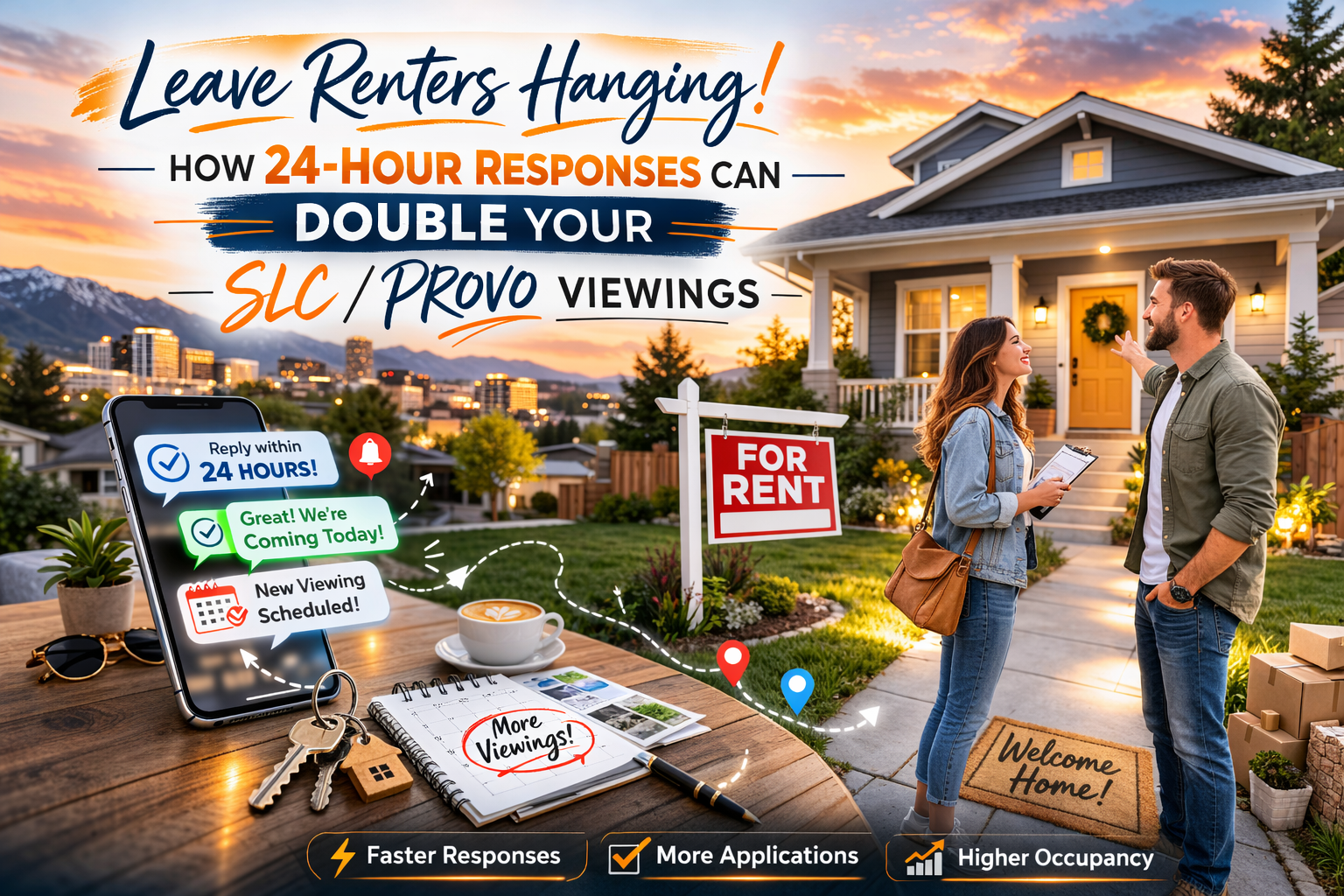
- **A. The Cold, Hard Data:** This isn’t just conjecture; the data speaks volumes. If you can manage to respond to an inquiry *under an hour*, you’re not just meeting expectations; you’re obliterating them. You’re doubling the industry average for viewing conversions, potentially saving yourself a staggering 7-10 days of vacancy. A response within 1-2 hours is respectable, generally considered the industry standard, and can still shave off 3-5 days of vacancy. But venture into the territory of *24 hours or more*, and you’re staring down the barrel of a 50% drop-off in viewing conversions. That’s not just a missed opportunity; it’s a full-blown lead loss.* **B. The Psychology of the Impatient Renter:** Why the rush? We’ve become a society conditioned for instant gratification, and renters are no exception. They *expect* a swift reply. Nearly half anticipate hearing back by the end of the next day. A quick response doesn’t just answer their question; it sends a powerful message: “I’m on top of things. I value your time. I’m the kind of landlord you want to rent from.” It sets you apart from the competition, painting you as proactive and professional.
III. Your 3-Step Playbook for Instant Tenant Engagement
- **A. Template 1: The Instant “I Got You!” Acknowledgment:** This is your digital handshake. The goal is simple: confirm receipt of the inquiry, project professionalism, and offer a tantalizing glimpse of what’s to come. Automate this! It’s crucial. Keep it clear, concise, and friendly. Confirm the property’s availability, hint at the next steps, and, crucially, consider the medium. An SMS message is often read within minutes, boasting a remarkable 90% response rate within 30 minutes. Email, on the other hand, can languish for 90 minutes before being opened, and even then, the response rate plummets to a mere 6%. For example: “Thanks for your interest in [Property Address]! It’s available, and we’re excited to tell you more. Check your email for next steps!”* **B. Template 2: The Smart Pre-Screening Power-Up:** Not all inquiries are created equal. Your goal here is to gently filter out time-wasters *before* you invest time in scheduling a showing. Be transparent about your requirements upfront – income thresholds, pet policies, the usual suspects. Ask essential, non-discriminatory questions that help you gauge their suitability. For example: “Great to hear from you again! To ensure this property is a perfect fit, could you answer a few quick questions about your desired move-in and household?”* **C. Template 3: The Post-Viewing Nudge That Seals the Deal:** The viewing went well; now what? Strike while the iron is hot! Send this follow-up within hours of the showing, while your property is still fresh in their mind. Personalize it by referencing something they specifically liked about the space – the natural light, the updated kitchen, whatever resonated with them. And, of course, include a clear call to action: apply now! For example: “It was a pleasure showing you [Property Address] today! I hope you loved [mention specific feature] as much as we do. Ready to make it yours? Apply here!”
IV. The Brains Behind the Speed: How Technology Transforms Your Response Game
- **A. The Evolution of Automation:** This isn’t your grandpa’s rental market. The journey from newspaper ads and frantic phone calls to online listings on Zillow and Trulia feels like ancient history. Even the early CRM systems of the 2000s seem quaint by today’s standards. Now, in the 2020s, we’re witnessing a true revolution driven by AI and sophisticated chatbots. These technologies are capable of handling a staggering 80% of routine inquiries, slashing response times by a remarkable 30-40%.* **B. Introducing Rentomatic (or a Smart CRM): Your Digital Assistant:** Think of it as your indispensable digital assistant. A centralized hub for contact management, automated communication (emails, reminders – the works), lead tracking, and streamlined workflows for everything from leasing to payments and maintenance requests. Why do you need it? Because it efficiently converts leads into tenants, meticulously tracks your financials, and provides invaluable insights into your entire portfolio. It’s like having an extra pair of hands (or ten!) that never sleeps, never takes a break, and never forgets to follow up. The dream is to cut vacancy times from 45 days to 12 days. While a specific Rentomatic case study to that effect may not be readily available, the underlying principle is undeniably sound: efficient systems dramatically reduce vacancy times, translating to tangible gains for your bottom line.
V. The Fine Print: Navigating the Future of Automated Screening (Controversies & Ethics)
- **A. The Dark Side of Automation:** Let’s not pretend that automation is a perfect, utopian solution. The reality is that AI can, and sometimes does, go wrong. One of the most pressing concerns is algorithmic bias. AI learns from historical data, and if that data reflects existing societal biases (as it often does), the AI will perpetuate those biases. This can disproportionately affect minority applicants or those who rely on housing vouchers, leading to discriminatory outcomes. Lawsuits have already been filed challenging these practices. Another issue is the “black box” nature of some algorithms. How are decisions being made? The lack of transparency makes it incredibly difficult for applicants to challenge denials. Inaccurate data in background checks can also lead to unfair denials. The Department of Housing and Urban Development (HUD) is actively monitoring the situation, and landlords need to be vigilant in ensuring that their AI tools comply with Fair Housing Laws.* **B. The Road Ahead: Smarter, Fairer Automation:** The future isn’t about abandoning automation; it’s about refining it. We can expect to see more sophisticated machine learning algorithms capable of gleaning deeper insights into applicants’ financial stability, spending patterns, and rental history. Robust fraud detection mechanisms with real-time verification will become increasingly prevalent. AI chatbots will become even more intelligent and conversational. However, ethical considerations must remain at the forefront. Expect increased regulatory scrutiny, a greater emphasis on algorithms that actively minimize bias, and a demand for transparency and explainability. Human oversight will remain crucial. We may even see new features emerge, such as predictive models for tenant retention, customizable risk scoring systems, and automated video verification processes – all designed to make the process more robust and efficient, but always with a watchful eye on fairness and equity.
VI. Ready to Double Your Viewings (and Ditch the Vacancy Blues)?
- In the hyper-competitive Salt Lake City and Provo rental markets, fast, structured responses are no longer a luxury; they’re an absolute necessity. Implementing a robust 24-hour response system, bolstered by smart templates and cutting-edge CRM technology, isn’t just about efficiency; it’s about survival. It translates directly into more viewings, shorter vacancy periods, and a healthier bottom line.Don’t let valuable leads slip through your fingers. Get your free lead audit today and discover how quickly you can transform your rental game!