
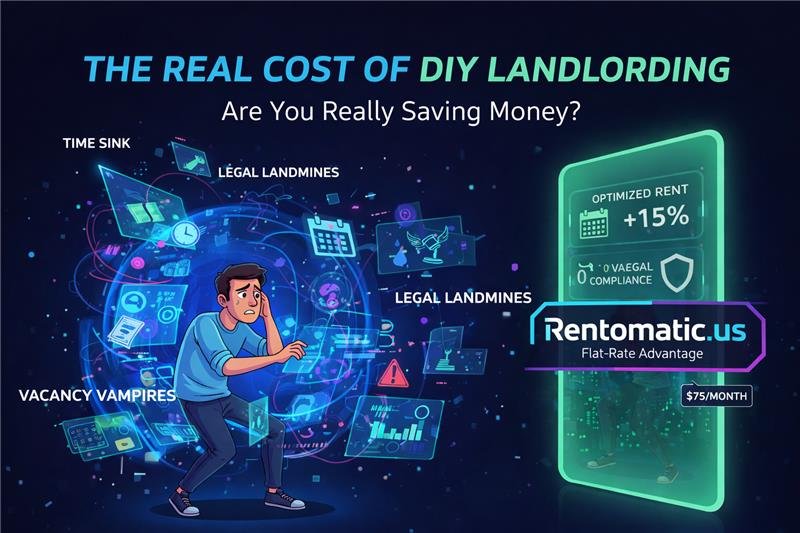
So, you’re a landlord. Congratulations! You’ve taken the plunge into the world of property ownership. Now comes the million-dollar question: do you manage it yourself, or hire a pro?”
The initial allure of DIY landlording is strong, fueled by the siren song of “I can save those property management fees!” But is it really that simple? Is that initial calculation the full picture?
Let’s face it, the world of real estate, especially rentals, is a labyrinth of regulations, tenant relations, and maintenance demands. We’ll dissect why self-managing might seem economical but often ends up costing more in terms of your precious time, your sanity, and your hard-earned dollars.
The Evolution of Management
The Early Era
Back when land was plentiful and regulations were few, the notion of professional management was virtually nonexistent. Landowners handled everything themselves. Life was, comparatively speaking, simpler.
🏭 Industrial Shift
Cities swelled, multi-unit buildings sprouted, and the “caretaker manager” emerged—often a tenant trading rent for basic upkeep.
📉 The Great Depression
The true genesis of the modern industry. Banks needed experts to manage foreclosed portfolios during the economic crash.
2026: A New Frontier
Today, we inhabit a world of intricate laws, evolving tenant rights, and ever-increasing complexities. Managing a rental in 2026 is light years away from managing your grandpa’s rental.
The DIY Dream vs. Reality
Hidden Costs
- 01. Time Investment
4-20 hours/month. At $50/hr, that’s up to $750 in “lost” productivity.
- 02. Vacancy Vampires
Average rent loss during vacancy hits $1,500/month. Pros minimize this with scale.
- 03. Maintenance Black Holes
Lack of vendor networks leads to 30-40% higher repair bills.
The Future is Now: PropTech
Faster, more accurate, and less biased tenant vetting using sophisticated algorithms.
IoT sensors detect leaks and failures before they become catastrophes.