
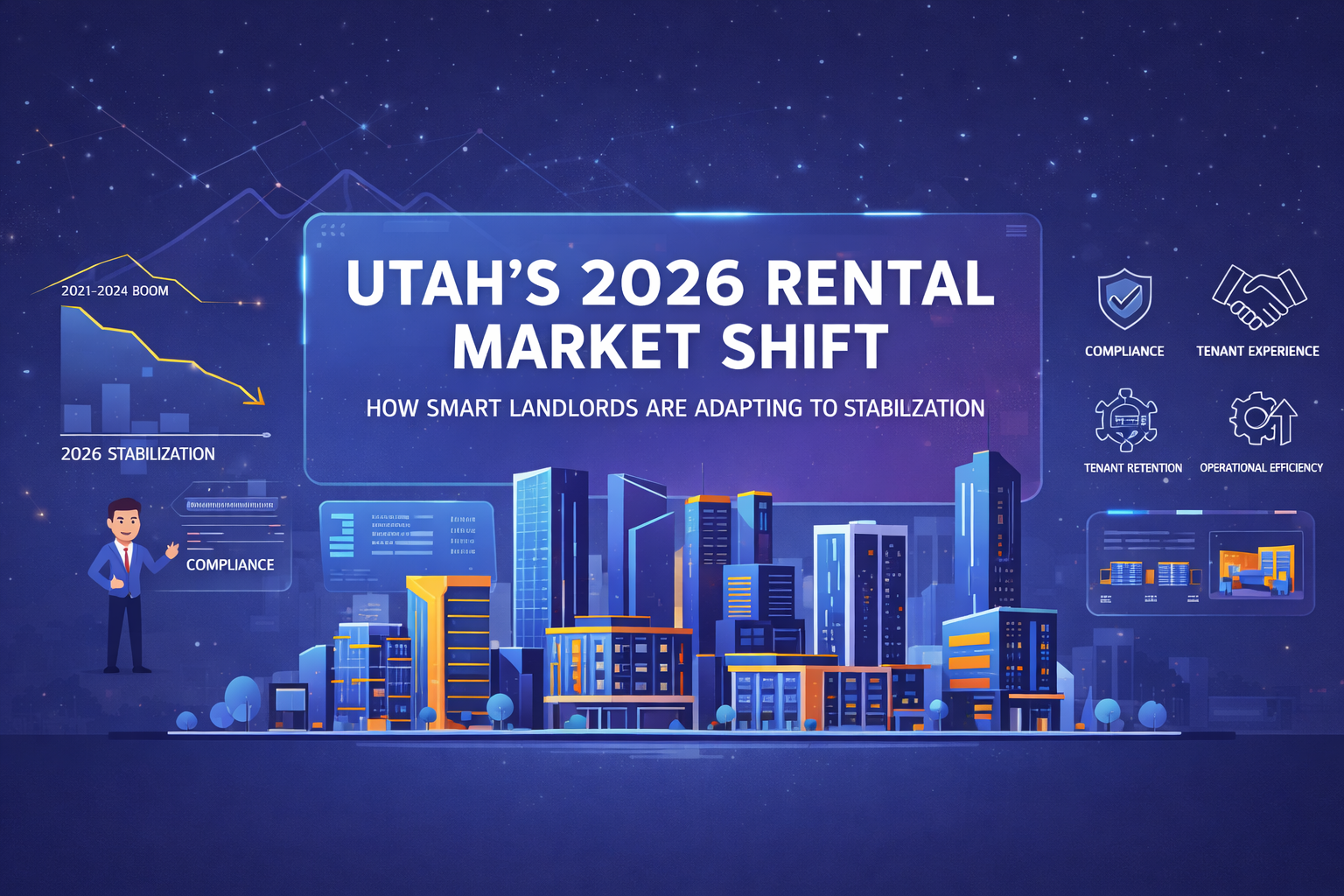
For years, it felt like Utah’s rental market was on an endless ascent. But what goes up must eventually… find a new equilibrium. And that’s precisely where we find ourselves in 2026: a period of stabilization.
I. Opening: The Rental Rollercoaster Just Hit a Plateau
For many landlords, particularly those who entered the scene during the heady days of 2021-2024, this is uncharted territory. Longer vacancies are no longer an anomaly but a looming reality. Tenants, suddenly armed with choices, are exercising their leverage. Concessions, once a relic of a bygone era, are making a comeback.
But let’s not mistake equilibrium for crisis. This isn’t a doomsday scenario; it’s an opportunity. A chance for the professional, the strategic, the smart landlord to rise above the noise. The old playbook – the one that relied on simply raising rents and filling vacancies in a matter of hours – is now obsolete. A new approach, one centered on tenant experience and operational efficiency, is essential.
- Supply Surge: Multifamily construction projects from 2022-2024 are now delivering units, significantly increasing inventory and competition.
- Cooling Rents: Salt Lake County has seen a 3.2% dip in average rents since July 2025, with similar downward pressure in Davis and Utah counties. This is a noticeable decline, not just a plateau.
- Concession Mania: Landlords are offering incentives like free first month’s rent, reduced security deposits, and multiple months of free rent to attract tenants, maintaining apparent stable base rents.
- Extended Vacancies: Units are now vacant for weeks instead of days. Statewide vacancy rates have risen from below 4% to above 7% in many areas, with new Salt Lake City apartments and Utah County particularly affected.
- Tenant Leverage: Renters now have more power, are more discerning, and actively seeking the best deals and terms available.
Projected Outlook: The Kem C. Gardner Policy Institute anticipates this supply surge to be temporary. Rents are expected to resume an upward trend by late 2026 to early 2027 as construction slows and demand catches up.
II. The Wild Ride Before the Calm: A Look Back at Utah's Rental Boom
To truly understand the present, we must first examine the past. Utah’s housing market has been on a growth trajectory since the turn of the millennium, experiencing annual increases of 5% or more. The seeds of the rental boom were sown with low mortgage rates, exemplified by the rock-bottom 2.96% we saw in 2021, and the proliferation of short-term rentals that further constrained the housing supply.
Then came the boom years, from 2021 to 2024, a period characterized by a confluence of factors. The COVID-19 pandemic acted as a catalyst, creating a surge in demand for short-term rentals, exacerbating existing housing shortages, and wreaking havoc on supply chains. Utah’s rapid population growth, hitting 1.6% in 2024, consistently added fuel to the fire.
Initially low interest rates pushed many would-be homebuyers into the rental market, driving up demand and, consequently, rents. Salt Lake County saw rents skyrocket by an astonishing 20.7% in 2021. In response, developers scrambled to meet the demand, initiating record levels of apartment construction. Approximately 10,000 units were approved annually, with a staggering 14,000 permits issued in 2021 alone. For a fleeting moment, supply even outpaced demand by roughly 4,000 units, primarily in Salt Lake City.
However, by 2024, the first signs of a cooling trend began to emerge. Rent growth slowed significantly, even dipping in certain areas, signaling a shift in the market’s dynamics.
III. 2026: What "Stabilization" Really Means for Your Bottom Line
So, what does “stabilization” truly signify for the landlord in 2026? It’s a multifaceted shift that demands a recalibration of strategies.
We’re seeing moderating rents, with minimal increases in Salt Lake County (less than 1%) and even decreases in Utah County (a 1.7% decrease in Q2 2024). Vacancy rates are on the rise, with a statewide average of 4.8% in January 2024. Salt Lake City is experiencing a total vacancy rate of 7.1% in Q2 2024, with some areas like Sandy hitting 7.3% and downtown Salt Lake City reaching a concerning 11%.
The surge in new construction from previous years has flooded the market with options, empowering renters with greater choice, improved amenities, and increased affordability. This newfound power translates to landlords offering concessions, such as the first month free or reduced security deposits, and facing more selective renters. Vacancy periods are extending, stretching from days to weeks, now averaging around 52 days.
The cost of inaction in this environment is substantial. A 52-day vacancy in Salt Lake City can translate to a loss of $4,165-$4,325, encompassing both lost rent and carrying costs.
However, it’s crucial to maintain perspective. The Kem C. Gardner Policy Institute wisely points out that this surge in supply is temporary. Rents are expected to rebound in late 2026 or early 2027, presenting a window of opportunity for those who adapt effectively.
IV. Navigating the Legal Landscape: New Rules, New Risks
The shifting sands of the rental market aren’t confined to economics. Utah’s legal landscape is also evolving. Historically regarded as landlord-friendly, the state is now seeing new legislation aimed at promoting greater transparency.
HB 182, which took effect in May 2025, mandates written disclosures before any payment is collected. Landlords must now provide clear estimates of rent and fees, outline screening criteria, specify availability, and detail refund terms. The bill also allows for electronic security deposit returns (with consent) and grants tenants access to essential items post-eviction (within five business days).
Compliance isn’t merely about avoiding legal repercussions. Professional landlords recognize that transparency builds trust, a crucial competitive advantage in this evolving market. A single negative review stemming from opaque practices can deter quality tenants.
This trend isn’t unique to Utah. Other states are also cracking down on “junk fees” and bolstering tenant protections, indicating a broader national movement towards transparency and fairness.
V. The "Smart Landlord" Playbook: Adapting to Win in a Balanced Market
The era of simply raising rents and expecting instant occupancy is over. The “smart landlord” of 2026 embraces a new playbook, one centered on tenant experience, strategic pricing, and operational efficiency.
1. Tenant Experience Takes Center Stage:
In a market where renters have options, the experience you provide becomes a key differentiator. This means:
- Swift, responsive maintenance, ideally within 24-48 hours.
- Professional, digital communication systems for seamless interactions.
- Proactive lease renewal conversations, initiated 90 days before the expiration date.
2. Strategic Pricing for Occupancy:
A slightly lower, occupied rent is far more valuable than months of vacancy. For example, offering a rent of $50/month below market rate is a wiser choice than enduring two months of vacancy. Renewal incentives are significantly less expensive than the costs associated with tenant turnover. Transparent fee structures foster trust and goodwill.
3. Operational Efficiency is Essential:
- Streamlined tenant screening processes that deliver results within 48 hours.
- Professional showings and seamless move-in coordination.
The Retention Math: Why Keeping Tenants Pays Off
Tenant turnover is a costly affair, averaging between $3,100 and $5,100 per unit (encompassing 30-45 days of vacancy, cleaning, repairs, marketing, and screening). The average turnover cost in Utah is around $3,872.
In contrast, modest rent increases (2-3% for renewals) and strategic maintenance upgrades represent a far more cost-effective approach, saving thousands of dollars compared to the expenses associated with turnover.
VI. Future Forecast: Poised for the Next Upswing
Looking ahead, we can anticipate:
- Short-term (Through 2026): Continued stabilization, with potential slight dips in Utah County.
- Mid-term (Late 2026 – Early 2027): A resurgence in rent growth as construction slows and demand rebalances.
- Long-term: Utah’s consistent population growth and robust economy promise a bright future for the rental market. Strategic investments made now will yield significant returns in the years to come.
The key takeaway is that this period of stabilization is a transition, not a downturn. By adapting now, landlords can position themselves to capitalize on future growth.
VII. Don't Just React, Lead: Your Path to 2026 Profitability
The stabilization of Utah’s rental market in 2026 serves as a crucible, distinguishing reactive landlords from strategic investors. Tenant retention, operational efficiency, and unwavering legal compliance are the cornerstones of success in this new era.
Don’t just react; lead.
Navigate Utah’s 2026 rental market with confidence. See how Rentomatic’s market-responsive management keeps your properties occupied and profitable.