Why Smart Landlords Are Ditching Percentage Fees
Something’s shifting in the property management industry. Across Utah and nationwide, landlords are asking a question that seems obvious in hindsight: “Why am I paying MORE when my property rents for more, when the manager’s work stays exactly the same?” It’s a fair point, isn’t it? Are we truly extracting value, or simply adhering to an antiquated system?
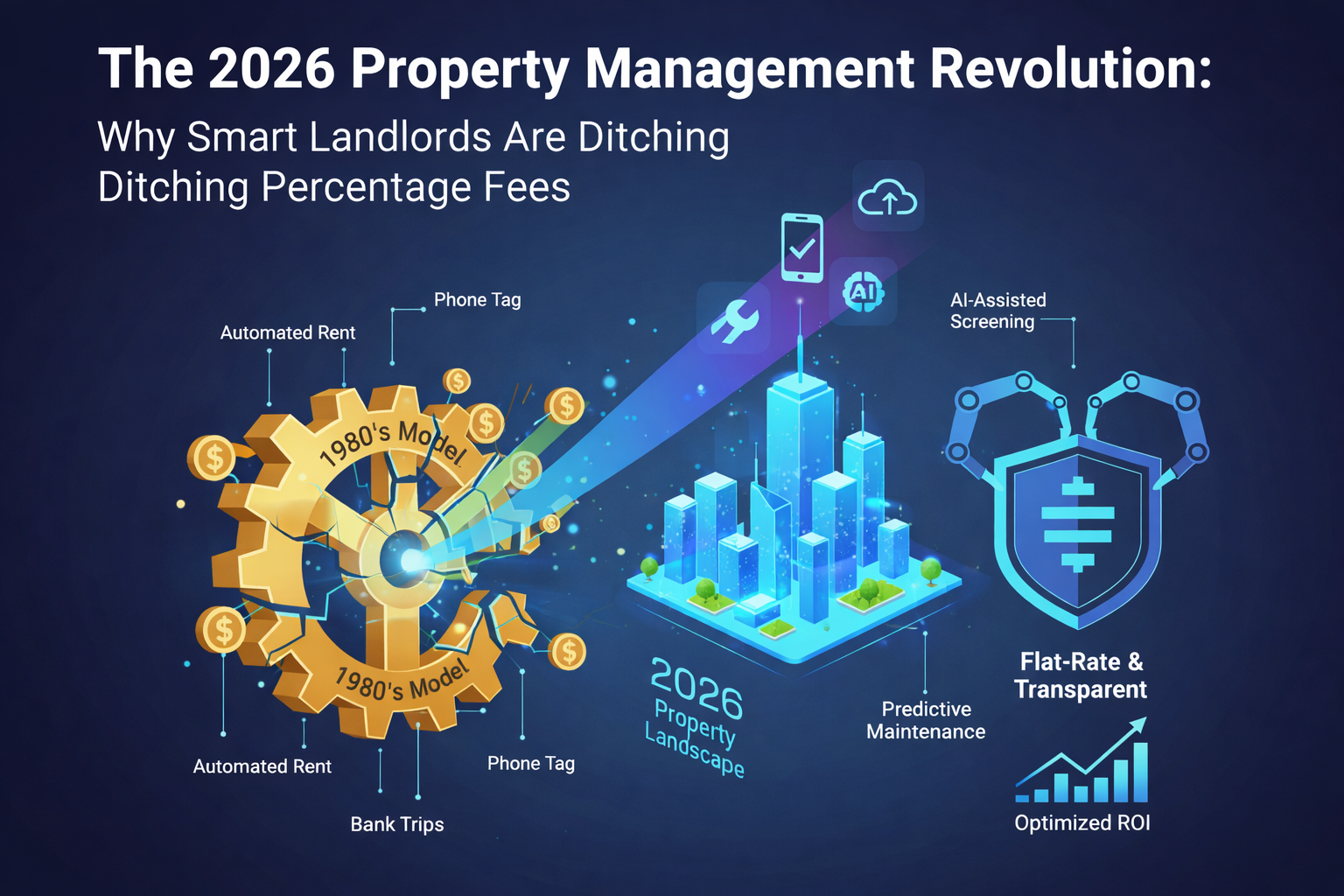
It’s 2026. We have cloud-based platforms, automated rent collection, AI-assisted tenant screening, and digital maintenance coordination. Technology has revolutionized property management efficiency—yet most companies still charge percentage-based fees locked in from the 1980s. It begs the question: are we slaves to tradition, or pioneers of progress?
The revolution is here: flat-rate, transparent, tech-driven property management is replacing the outdated percentage model. And landlords who make the switch early are reaping the rewards. But this isn’t just about saving a few bucks; it’s about aligning incentives and embracing a new era of efficiency and transparency.
The Old Model: Built for a Different Era
Percentage-based fees made perfect sense 40 years ago, born out of a different real estate landscape, a world of rotary phones and carbon copies. To truly understand the shift, we need a brief historical detour.
Picture the Great Depression era, a time when professional property management emerged to handle increasingly complex properties. Organizations like IREM were born, codifying practices in a world grappling with unprecedented economic hardship. This was the rise of the “caretaker manager,” a guardian of assets in turbulent times.
Back then, property management was a hands-on, labor-intensive gig. Manual rent collection meant physical bank trips, handling checks with the same care one might handle precious metals. Tenant screening involved paper applications, endless phone calls to previous landlords, and gut feelings. Maintenance coordination relied on rolodexes, playing phone tag, and the sheer grit of human effort.
Why did the percentage model make sense then? Because it aligned incentives. The more rent the manager collected, the more they earned, encouraging them to keep properties occupied and rents high. It was a simple, scalable, and adaptable model before digital tools existed, covering a broad range of manual services. It rewarded effort directly tied to tangible outcomes.
The Percentage Paradox: Why the Old Model Is Breaking Down in 2026
But time marches on, and cracks have begun to appear in this foundation. The core frustration: technology has slashed manual work, but fees still climb with rent. Is a manager really doing 10% more work because your property’s rent went up by $200? The data suggests otherwise.
Landlords with higher-rent properties often pay significantly more, even if the management tasks are identical to a lower-rent unit. It feels like a punishment for owning a premium asset, a bizarre inversion of the reward system. We’re penalizing success, aren’t we?
While percentages supposedly align incentives, what happens during a vacancy? Some models still charge a fee, and others might reduce the urgency to fill a unit quickly if their primary fee is based only on collected rent. A perverse incentive emerges: slower action equals potentially higher future gains.
And then there are the predictability problems. With fluctuating market rents, your management costs become a moving target, making budgeting a headache. This lack of financial clarity can throw a wrench into even the most carefully laid investment plans.
Enter the Disruptors: Flat-Rate and the Tech Takeover
Enter the disruptors, offering a breath of fresh air with the flat-rate promise.
Imagine the budgeting bliss: predictable, fixed monthly costs regardless of rent changes. No more guessing games! Especially attractive for landlords with properties commanding higher rents, where a flat fee can mean substantial annual savings. It’s about fair play: many argue the work remains consistent, so the fee should too. It’s about the service, not the rent amount.
With a fixed fee, managers are incentivized to provide consistent, high-quality service and maintain occupancy to build long-term relationships, rather than just chasing higher rents. The focus shifts to long-term value, a more sustainable and mutually beneficial approach.
Technology is the engine of this revolution. This isn’t science fiction. AI-powered tenant screening, automated rent collection, digital lease management, and maintenance request processing are standard. These aren’t future promises; they’re present realities.
Property managers leveraging cloud-based platforms can manage portfolios remotely, access data instantly, and scale operations efficiently, making flat-rate models financially viable and profitable. The cloud isn’t just storage; it’s a launchpad for efficiency.
IoT devices and AI can foresee issues before they become emergencies, saving money and keeping tenants happy. Data analytics drive smarter decisions on everything from marketing to tenant retention. Predictive maintenance becomes the norm, transforming reactive problem-solving into proactive prevention.
Online portals and AI chatbots mean 24/7 tenant support and faster issue resolution, enhancing the tenant experience and reducing manager workload. Communication evolves from a chore into a seamless, always-on experience.
Beyond the Base: Navigating the New Fee Landscape (and the Sneaky "Junk Fees")
But be warned: it’s more than just the monthly fee. Don’t get fooled by a low base fee. The true cost of property management can be hidden in a maze of additional charges. Some companies offer tiered or hybrid models, attempting to blend the best of both worlds—a base fee with performance-based incentives for specific services. Always ask for details.
Beware of the hidden cost minefield: setup fees, leasing/tenant placement fees (often 50-100% of one month’s rent per new tenant), lease renewal fees, maintenance markups (some PMs add 5-15% on top of vendor invoices), inspection & vacancy fees, and eviction handling fees.
And watch out for the rise of “admin junk fees,” those opaque administrative charges that used to be absorbed into rent or management fees. Transparency is key. Landlords and renters alike are pushing back against these practices, demanding clarity and fairness.
Is Flat-Rate for You? Expert Advice for the Modern Landlord
There’s no one-size-fits-all answer. The “best” fee structure depends entirely on your specific property, investment goals, and risk tolerance. So, ask the right questions:
For higher-rent properties, flat fees often win financially. For lower-rent, a percentage might still be more economical if it’s truly all-inclusive. Consider your budgeting preferences: do you crave predictable expenses (flat-rate) or are you comfortable with variable costs tied to performance (percentage)?
What exactly is included in the base fee? Don’t assume. Demand a detailed breakdown of all tasks, from marketing to maintenance. What level of service are you truly receiving?
Beyond fees, a great property manager adds significant value through rigorous tenant screening, proactive maintenance, compliance expertise, and strategies that boost your ROI. Their fee should feel like an investment, not an expense. Are you paying for a cost, or investing in a partnership?
And remember, due diligence is your best friend. Always compare quotes from multiple companies, scrutinize every line item, and ask for client references. Don’t be afraid to dig deep and challenge assumptions.
Embrace the Revolution: Future-Proofing Your Investment
The times, they are a-changin’. The property management industry is finally catching up with the 21st century. The old percentage model, while historically relevant, is increasingly out of step with today’s tech-driven efficiencies.
Forward-thinking landlords are recognizing that transparent, flat-rate, tech-enabled property management isn’t just a trend—it’s a strategic move to optimize costs, enhance predictability, and ultimately, maximize their investment returns.
Don’t get left behind. As the market shifts, choose a property management partner that leverages modern technology to deliver exceptional service and clear pricing, ensuring your property thrives in the 2026 landscape and beyond. The future of property management isn’t just about managing properties; it’s about maximizing potential.